Loosing My Husband To Cancer
—
mission Single podcast
—
When her husband was diagnosed with brain cancer, Lori Hearn had to find out what her faith was truly made of. What she discovered has shaped how she walks alongside others in their darkest seasons.
Lori Hearn describes one of the happiest stretches of her life in a way most people wouldn’t expect. It wasn’t her wedding day or the birth of her children, though both were precious. It was the season right before everything fell apart.
“I was at a place where I knew how the Lord had gifted me and was so passionate about using those gifts,” she recalls. Her husband was thriving as an executive pastor. She was writing, speaking at women’s conferences, and watching fruit grow from years of faithful ministry. “My life had just been so radically changed by the word of God and knowing His heart.”
Then came April 28th, 2010. A phone call from the hospital. A golf ball-sized tumor in the
front left lobe of her husband’s brain.
“It felt like a chessboard that was turned upside down, and the pieces were scattered. I didn’t know which direction was up.” — Lori Hearn
What followed was three and a half years of fighting and eventually losing her husband to brain cancer. But Lori’s story isn’t one of faith shipwrecked by suffering. It’s one of faith, tested, refined, and ultimately proven.
A Sovereign Thread She Almost Missed
Lori and her husband met through mutual friends on an ordinary Friday night. Neither of them was a believer at the time. “We were just chasing after anything that could fill us up,” she says. But looking back, she sees something else entirely at work.
“It blows me away that the Lord would be so faithful to someone that He knows He’s going to call to Himself — when that person is just running full speed in the opposite direction.” They married in 1990, eventually moved to Atlanta, had two children (Davis and Mallory), and stumbled into a church pew one Sunday because they simply knew they needed something more. What followed was a transformation, especially in her husband.
“He did a complete 180. He was already a man of integrity and character, and so he just led our family so well.” He eventually entered full-time ministry. Lori stepped into women’s ministry. Life, by any measure, was good.
Why Does God Allow It?
It’s the question Lori wrestled with and the one that anyone who loves both God and His people eventually faces. Why would a faithful, fruitful servant be taken so soon?
Her answer is quiet, hard-won, and honest.
“In hindsight, he could have lived another 30 or 40 years and touched a few lives a year. But in those three and a half years that he fought his battle, he touched thousands of lives.” — Lori Hearn
“We just don’t know,” she says. “That’s up to God. And that’s a really hard reality for us to wrestle with. This is probably not the way we would do it.”
A Theology of Suffering in Plain Language
There is a double suffering when we don’t have an accurate theology of suffering. When we don’t understand what God says about pain, the pain itself becomes harder to bear.
Her brief theology? “Suffering is encountering the reality of the brokenness in this world and understanding it grieves God’s heart as much as it grieves ours. But through it, we get to see a greater depth and understanding of God’s heart. His compassion, His mercy, His tenderness, His faithfulness.”
She pushes back gently on the phrase so many well-meaning people reach for: God won’t give you more than you can handle.
“Can you show me where scripture says that?” she asks. “Life is more than we can handle. But God’s grace is always sufficient.” Her reframe is clarifying: “God will give you more than you can handle, but He will never give you more than His grace can handle.”
Grieving With Hope
Scripture says we don’t grieve as those without hope. But Lori points out that we often reserve that hope for the afterlife, when God intends it for right now.
“Grieving well means I don’t lose sight of what I know to be true, regardless of how strong my emotions are.”
Lori Hearn
“We have confident expectation that God is going to heal the broken places, that He is going to bring beauty from ashes, that He is going to comfort us in our time of pain and need.” She distinguishes between faith and hope this way: “Faith is believing that God can do what He says He can do. Hope is believing that He will.”
She also notes that in scripture, hope isn’t just a noun, it’s a verb. “To hope in the Lord is an active pursuit of trusting and resting and abiding in the goodness of the Father’s heart.”
How To Walk Alongside Someone Who Is Grieving
Lori has sat on both sides of this table, and she offers some of the most concrete guidance you’ll find on how to show up well for someone in the depths of loss.
The ministry of presence is everything. You don’t have to fix it. You don’t need the right words. Being there physically and consistently matters more than anything you might say.
Listen far more than you speak. “What they’re saying is going to help you understand at what level they are ready or able to hear truth. Sometimes the pain is so hard that you just want your pain to be acknowledged.” Your job in that moment is not to take the pain away. It’s to make the person feel genuinely seen.
Don’t ask them to manage your care for them. One of the encounters that stung Lori most came from a Sunday school teacher who pulled her aside and said, “You need to let us know what you need. We can’t help unless you tell us.” The intention was kind. The effect was crushing. “I didn’t know what I needed. And it felt like one more responsibility heaped on my shoulders.” Don’t require a grieving person to do the emotional labor of directing their own support.
Set a reminder. It’s simple, but it might be the most overlooked thing on this list. “As other people’s lives went on, mine just stood still. I felt more and more separated from life as I heard from people less and less.” Set monthly reminders in your phone to send a text, drop a card, or make a call. Let them know you still see them.
What not to say: “They’re in a better place.” “God’s going to use this.” These things may be true, but they’re rarely what someone needs to hear in the raw, early stages of grief. Trust the Holy Spirit to show you when and whether to speak truth, and when to simply sit.
Parenting Through It
One of the most quietly remarkable parts of Lori’s story is how she navigated grief as a mother. Her children were teenagers when their father passed. She was painfully aware of the weight her responses to loss could have on their view of God and their ability to heal.
“I didn’t want to parent them in a way that cultivated a heart of fear, or a heart of always anticipating that something was going to go wrong.” She let them grow, leave the nest, move into their own lives, even when it was hard, even when it added to her own sense of loss.
She also addressed something said to her son at his father’s funeral — that he was “the man of the house now.” She pulled him aside afterward. “No, you’re not! You’re still a kid.” She refused to let a well-intentioned comment become a burden her teenage son would carry for years.
Build Your Boat Before It Rains
If there’s one thing Lori wants to say to anyone who hasn’t yet walked through deep loss, it’s this:
“The time to build your shelter is not in the midst of the storm. Build your faith now. Get to know God and know Him for who He is. Think of Noah building the ark before the first drop of rain ever fell.” —Lori Hearn
Suffering will come. Scripture promises it. But the people who navigate it with the most resilience aren’t those who are spared from pain; they’re the ones who knew God before the storm arrived and could trust the shelter when they needed it most.
“The most important part of my story,” Lori says, “is that I know the God that I believe in. I know His heart. And I trust His heart. That has made all the difference.”
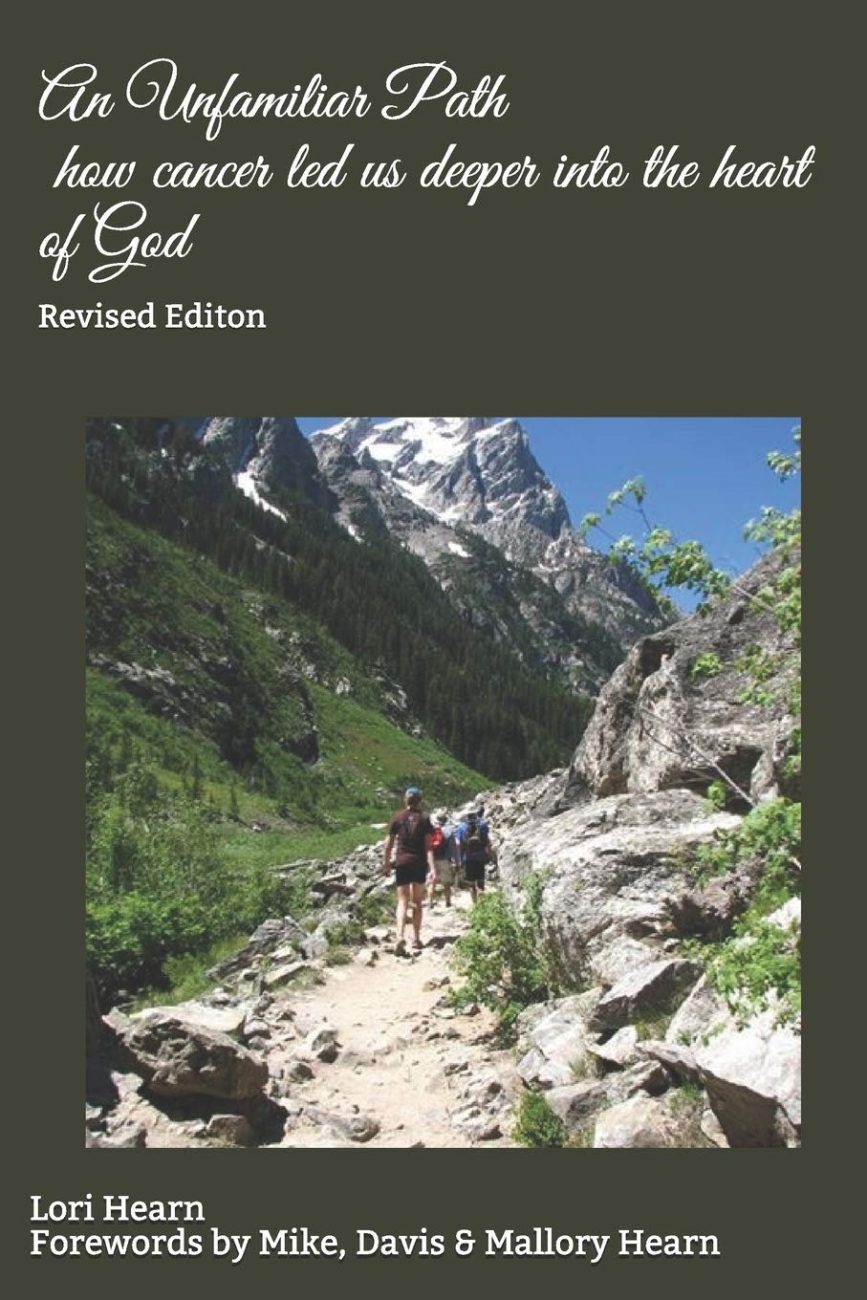
Read Lori’s Full Story
Lori’s complete journey through her husband’s cancer battle and her path to healing is documented in her powerful book, compiled from the Caring Bridge journal entries she wrote during those difficult years. This raw, honest account offers an intimate look at how faith can sustain us through life’s darkest valleys.
Originally created to raise funds for other families facing catastrophic health events, Lori’s book has become a source of comfort and hope for countless readers navigating their own storms.
This article was adapted from an interview with Lori Hearn. To hear the full conversation, watch the complete episode on the Mission Single Podcast, hosted by Kelly Werner.
More From Our Blog!
Why Your Work Matters to God, But Not Always to the Church
Peggy Bodde spent decades leading in corporate America while raising a daughter alone. The church didn’t always know what to do with her. God did.
Financial Habits Every Single Woman Needs
Faith-based financial strategies can transform your relationship with money and build lasting wealth.
How to Rebuild Your Life as a Single Mom
A conversation with interior designer and entrepreneur Katina Sullivan on lament, identity, and letting God rewrite your story.